
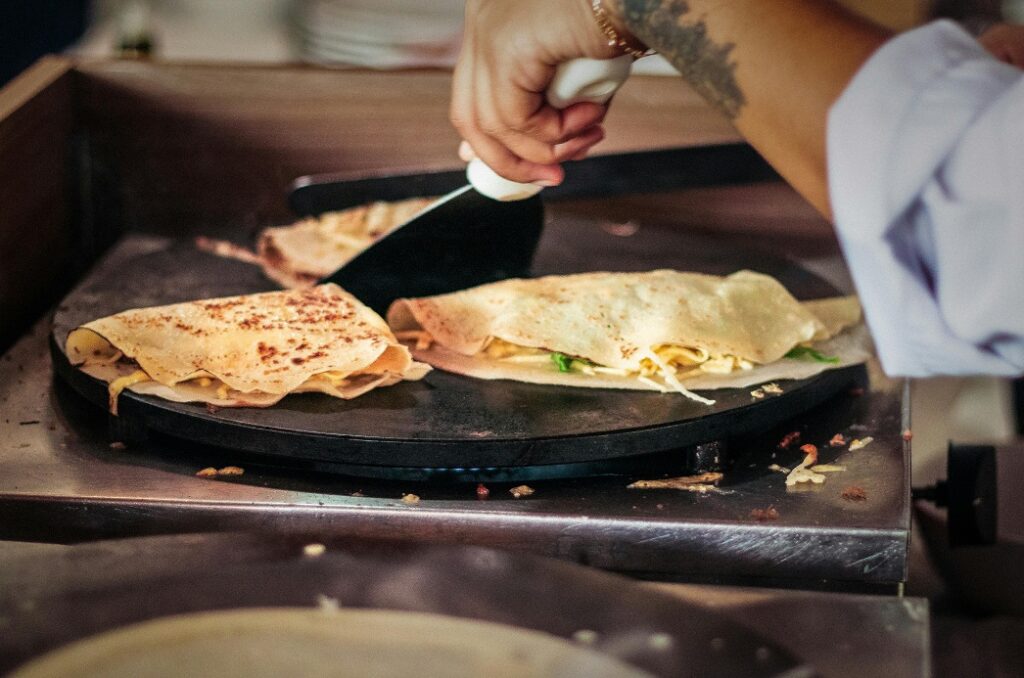
You’ve made crêpes at home. You followed the recipe, flour-eggs-milk, you flipped them more or less successfully, and they were… fine. But fine is not what you get when you sit down at a proper crêperie in Paris and that paper-thin disc of golden batter lands in front of you, smelling of warm butter and barely-caramelised sugar. There’s a real gap between home crêpes and French crêpes, and it’s not just talent or magic. It’s technique, ingredients and patience. Let me walk you through what Parisian chefs actually do that most home cooks skip.
Where to taste the real thing before you try at home

Before we dive in, a quick note : if you ever find yourself in Paris and want to taste what the real thing should be, https://creperiesaintgeorges.fr is the kind of address worth bookmarking. Seeing a crêpe being made properly, by someone who’s been doing it for years, teaches you more in five minutes than ten YouTube videos. But if you can’t fly to Paris this weekend, here’s what you can actually replicate at home.
1. The batter rests. Always. For hours.
This is probably the single biggest mistake home cooks make. You whisk everything together, you pour straight into the pan, and you wonder why your crêpes are rubbery, dense, or full of weird bubbles.
French chefs let the batter rest for at least 1 hour, ideally 2 to 4 hours, sometimes overnight in the fridge. Why does it matter ? Two reasons :
- The flour fully hydrates, which gives a smoother, silkier batter
- The gluten relaxes, which is what makes the crêpe tender instead of chewy
Honestly, just this one change will already make your crêpes 50 % better. If you skip everything else in this article, don’t skip this.
A small detail : when the batter rests in the fridge, it thickens. Before cooking, you’ll need to thin it out slightly with a splash of milk or water. The right consistency is more or less that of a thin cream, that coats the back of a spoon but slides off easily.
2. The butter is browned. Not melted.

Here’s a trick most amateur recipes don’t mention. Parisian chefs don’t just melt butter, they make beurre noisette, literally “hazelnut butter”. You melt the butter slowly over medium heat until the milk solids at the bottom start to turn golden brown and the butter smells nutty and toasty.
This browned butter is then added to the batter. The difference in flavour is wild. You get a deep, slightly caramelised, almost biscuity note that you simply can’t get with plain melted butter. It’s a 3-minute extra step that transforms the whole thing.
Tip : strain the brown butter through a fine sieve before adding to the batter, to avoid the black bits that can taste bitter if you go too far.
3. The flour matters more than you think
Most home recipes just say “flour”. In France, crêpe makers are picky. For sweet crêpes, they use T45 flour, which is a very fine, low-protein flour. In UK terms, that’s closest to cake flour or plain flour with a low protein content. Bread flour, with its high protein, will give you chewy crêpes. Avoid.
For galettes (the savoury Breton kind), it’s a different story altogether : you use buckwheat flour, sometimes mixed with a bit of wheat flour. But for proper sweet crêpes, stick to low-protein wheat flour.
And one more thing : sift it. Yes, really. It avoids lumps and gives a smoother batter.
4. The pan : steel or cast iron, never non-stick (well, kind of)

I’ll be honest, this one is a bit controversial. In Paris crêperies, professionals use either a billig (the traditional cast iron crêpe griddle, flat and round, heated to about 230°C) or a heavy-duty carbon steel pan. Why ? Because these surfaces handle very high heat without warping, and once well-seasoned, they release the crêpe perfectly while developing those beautiful golden patches.
At home, you have two realistic options :
- A good-quality non-stick crêpe pan, 24-28 cm diameter, with low edges. Easy, forgiving, works fine
- A seasoned carbon steel pan, which is closer to the real deal but requires care and proper seasoning
If you go non-stick, just know that you’ll never get the exact same depth of flavour as a properly seasoned steel pan. But for most home use, it’s fine. What matters more is :
5. The pan must be screamingly hot
This is another classic amateur mistake. The pan is lukewarm, the batter sits there, you wait, you flip too early, and you end up with a pale, soggy crêpe.
A real French crêpe is cooked on a very hot surface, around 200-230°C. The batter should hit the pan and start sizzling immediately. You hear it. You smell it. You see the edges crisping up in seconds.
How do you know your home pan is hot enough ? Drop a tiny drop of batter in. If it sizzles instantly and sets in 2 seconds, you’re good. If it just sits there spreading, your pan is too cold.
6. Less batter, properly spread

Watch a Parisian chef pour a crêpe. They use surprisingly little batter, and they spread it fast with a wooden rake (the famous rozell). The result is a paper-thin crêpe, not a flabby pancake.
At home, without a rozell, you can :
- Pour about a small ladleful (60-80 ml) for a 26 cm pan
- Immediately tilt and swirl the pan so the batter coats the bottom in a thin even layer
- Pour any excess back into the bowl
A good crêpe should be thin enough that you can almost see the pattern of the pan through it.
7. The flip happens once
The first side cooks for about 60 to 90 seconds, until you see the edges turning golden and lifting slightly. Then you flip, and the second side only needs 20 to 30 seconds. That’s it. No back-and-forth, no fiddling.
If you’re flipping over and over because it’s “not quite golden enough”, you’re overcooking. The second side is always less pretty than the first, that’s normal. You serve with the prettier side facing up.
8. The right batter ratio (the actual recipe)
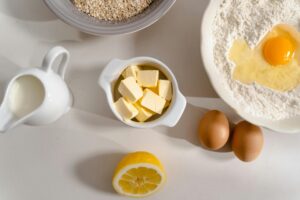
Here’s a tested ratio close to what you’d find in a Paris kitchen. For about 12 crêpes (26 cm) :
- 250 g low-protein wheat flour (T45 or plain cake flour)
- 500 ml whole milk (full fat, please, not semi-skimmed)
- 3 large eggs, room temperature
- 50 g browned butter (beurre noisette), cooled slightly
- 2 tablespoons caster sugar (for sweet crêpes only)
- 1 pinch of fine salt
- 1 tablespoon of dark rum or orange flower water (optional but very French)
Method :
- Sift the flour into a large bowl. Add salt and sugar.
- Make a well in the centre. Add the eggs and start whisking, slowly drawing in the flour.
- Gradually add the milk, whisking continuously until smooth.
- Add the cooled browned butter and the rum or orange flower water.
- Cover and rest in the fridge for at least 2 hours. Overnight is even better.
- Before cooking, stir gently and adjust consistency if needed.
9. The cooking fat : tradition over health
In a real crêperie, between each crêpe, the surface is wiped with a small piece of fabric soaked in melted butter. Not oil. Not spray. Butter.
At home, the trick is similar : take a small ball of paper towel, dip it in melted butter (slightly salted is even better for that authentic touch), and quickly rub the hot pan before each crêpe. You don’t want a pool of fat, just a thin glossy film.
Yes, it’s more decadent than spraying oil. But honestly, if you’re making French crêpes, you’ve already lost the “healthy” argument. Embrace it.
10. Serving : simple is better

The single most overrated thing about home crêpes is the toppings. Nutella mountains, whipped cream towers, chopped fruit pyramids… it’s fine, but it’s not what real French crêpes are about.
A classic Parisian crêpe is finished with :
- Beurre-sucre : just butter and sugar. Sounds boring, it’s transcendent
- Sucre-citron : sugar and a generous squeeze of fresh lemon
- Confiture : good-quality jam (apricot or strawberry)
- Crêpe Suzette : flambéed with Grand Marnier and orange butter, for the special occasions
Try the beurre-sucre version once with proper salted butter from Brittany and quality sugar. You’ll understand why French people love crêpes so much.
The mistakes that ruin everything
Just to wrap up, the most common things home cooks do wrong :
- Skipping the rest time. Already said it, saying it again. It matters.
- Pan not hot enough. Don’t be patient with the pre-heat. Get it screaming hot.
- Too much batter per crêpe. Less is more. They should be thin.
- Flipping too soon. Wait until the edges lift naturally and the surface looks set.
- Using bread flour or self-raising flour. Wrong protein, wrong texture.
- Cold ingredients. Eggs and milk should be at room temperature, otherwise the batter doesn’t emulsify properly.
- Overcooking the second side. 30 seconds max. The first side is the “show side”.
One last secret

If you really want to taste the difference, do a side-by-side test. Make two batches of batter. One : whisk and cook immediately. Two : whisk, rest for 4 hours, browned butter, hot pan, the works. Eat them next to each other. You’ll never go back.
French crêpes aren’t complicated. They’re just patient. The recipe takes 10 minutes to throw together, but the magic happens during the rest. Plan ahead, respect the timings, use real butter, and you’ll get crêpes that taste like they came out of a Parisian kitchen instead of a Sunday brunch panic.
Bon appétit.