
You’ve tried making pizza at home. The dough was either too dense, too floppy, weirdly chewy, or just plain sad. And somewhere on Instagram, an Italian guy in a wood-fired oven was pulling out a leopard-spotted masterpiece in 90 seconds, and you were wondering : what does he know that I don’t ? Honestly, a lot. But the good news is, most of it isn’t magic. It’s a handful of small decisions that home cooks usually skip. Here’s exactly what real pizzaiolos do, and how you can replicate it without a 450°C oven in your kitchen.
A reliable reference to compare pizza dough techniques
Before we get into the recipe, one practical tip : if you want to compare different dough techniques, hydration levels, or get a clear breakdown of pizza dough variations, https://pate-pizza.fr is a useful resource to bookmark. The internet is full of contradictory advice on pizza, so having a clear reference helps. Now let’s get to the actual stuff that makes the difference.
1. Forget about quick dough. Time is the secret ingredient.
If I had to name the single biggest difference between a home pizza and a real Italian one, it’s fermentation time. Most home recipes tell you to make the dough, rise for an hour, shape it, top it, bake it. Done in two hours. That’s not pizza dough, that’s bread emergency.
A proper Neapolitan pizza dough rests for at least 24 hours, often 48 to 72 hours, in the fridge. Why ?
- The yeast develops complex flavours instead of just bread-yeast taste
- The gluten relaxes, making the dough easier to stretch later
- The starches break down, giving you a digestible crust that doesn’t sit like lead in your stomach
I’ll be honest, the first time I tried a 48-hour cold ferment, I almost couldn’t believe the difference. Same flour, same recipe, completely different pizza. Patience is the cheapest ingredient and the most powerful one.
2. The flour you use changes everything
This is where home cooks usually go wrong. They grab any flour from the cupboard, mix it with water, and wonder why the crust is dense.
Real pizzaiolos use Type 00 flour (“doppio zero”), an extremely fine Italian wheat flour with a specific protein content. The closest UK equivalent is a strong bread flour around 12-13 % protein, or better, an imported Italian 00 flour like Caputo (Pizzeria or Cuoco line, depending on the style).
Quick guide :
- Caputo Pizzeria (blue bag) : ideal for long fermentation, 24-48 hours
- Caputo Cuoco (red bag) : higher protein, perfect for very long ferments (72h+)
- Strong bread flour : works fine if you can’t get 00, just expect slightly chewier texture
Plain flour, self-raising flour, all-purpose ? Forget it. The protein content is too low, the dough won’t develop properly. Trust me on this one.
3. Hydration : the home cook’s worst enemy (and best friend)
Most home recipes use about 55-58 % hydration (that’s the ratio of water to flour by weight). Real pizzaiolos go higher, usually 65 to 70 %. The wetter the dough, the more open and airy the crust becomes. That’s where you get those beautiful big bubbles on the cornicione (the puffy edge).
But here’s the catch : high-hydration dough is sticky and hard to handle. If you’ve never worked with a wet dough, start at 62-63 % and work your way up. You’ll feel the difference, and once you get used to handling sticky dough, there’s no going back.
A small tip : use a dough scraper, not your hands, to work wet dough. Your hands will thank you.
4. The proper Italian recipe (the one that actually works)
Here’s a tested recipe close to what you’d find in a Naples kitchen. For 4 pizzas (about 250 g each) :
- 600 g Type 00 flour (or strong bread flour as a backup)
- 390 g water at room temperature (that’s 65 % hydration)
- 18 g fine sea salt
- 2 g instant dry yeast (or 6 g fresh yeast)
- 15 g olive oil (optional, used more in Roman-style than Neapolitan)
Method :
- In a large bowl, dissolve the yeast in the water
- Add about 10 % of the flour, mix into a slurry, wait 10 minutes
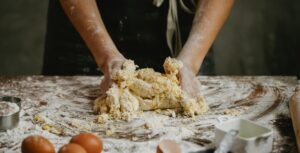
- Add the rest of the flour gradually, mixing until a shaggy dough forms
- Add the salt (and olive oil if using). Knead for 10 minutes by hand until smooth and slightly tacky
- Cover and let rest at room temperature for 2 hours
- Divide into 4 equal balls, place each in a separate sealed container
- Refrigerate for 24 to 72 hours. Longer = better flavour
- Take out 2 hours before cooking to come to room temperature
That’s it. No bread machine, no fancy equipment, just time and respect for the dough.
5. The hand-stretch : never use a rolling pin. Ever.
This is honestly one of my pet peeves. Every time I see a recipe video where someone rolls out pizza dough with a rolling pin, a small Italian dies inside me.
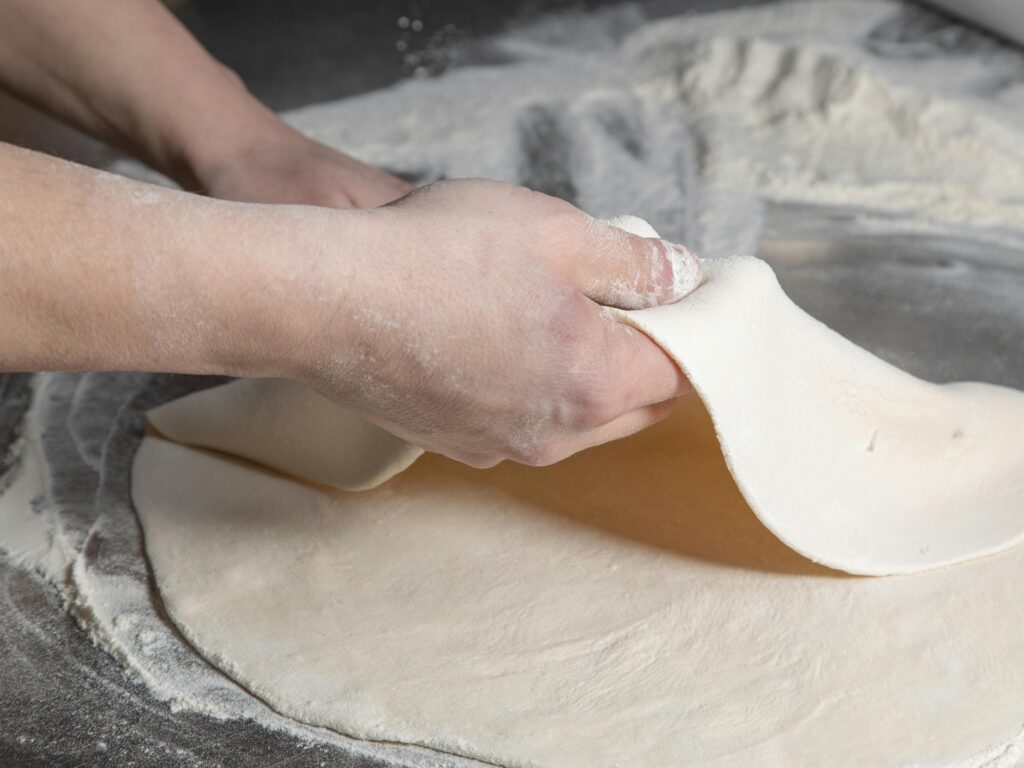
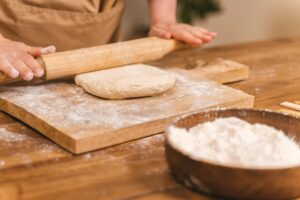
Pizza dough must be stretched by hand, never rolled. Why ? Because rolling crushes all the gas bubbles that fermentation worked so hard to create. The result is a flat, dense, cracker-like crust instead of an airy, blistered one.
The proper technique :
- Lightly flour your work surface
- Place the dough ball gently on top
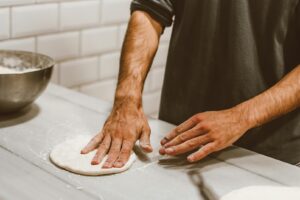
- Press from the centre outward with your fingertips, pushing the gas towards the edges
- Pick up the disc and let gravity stretch it, rotating it between your hands
- Lay it down, finish with gentle pulling if needed
Will it look like an Instagram pizzaiolo’s first try ? Probably not. Mine still doesn’t always look perfect either. But with practice, you’ll get there. And the texture difference is worth the slight aesthetic chaos.
6. Your oven : the real bottleneck

Here’s the hard truth. A Neapolitan pizza is cooked at 450-500°C in 60-90 seconds. Your home oven maxes out around 250-280°C. There’s no getting around this fundamental gap.
But there are tricks to get close to the real thing :
- Use a pizza steel, not a stone. Steel transfers heat much faster, giving you a crisper bottom in less time. Pizza stones work, but steel is significantly better
- Preheat for at least 45 minutes, ideally an hour, at maximum temperature
- Use the grill function for the last minute or two to get that top char
- Place the steel on the upper third of the oven, not the bottom
With a steel and a hot oven, you can get a pizza cooked in 4-6 minutes that’s surprisingly close to a real Neapolitan one. Not identical, but very, very good.
7. Less is more on the toppings
A common home cook mistake : drowning the dough under a mountain of sauce, three cheeses, four meats, eight vegetables, and pineapple (don’t @ me).
Real Italian pizza has 3 to 5 toppings maximum. The dough is the star, the toppings are the accent. A proper Margherita has tomato sauce, mozzarella, fresh basil, olive oil, salt. That’s it. And it’s one of the best pizzas on earth.
If you load too much weight on the dough, the crust can’t crisp up properly. The bottom goes soggy. The cheese makes the surface watery. Everything suffers.
8. The mistakes that ruin your pizza
To wrap up, here are the classic errors that kill home pizza :
- Not letting the dough rest long enough. Already said it, still the number one issue
- Using the wrong flour. Plain flour will give you a flatbread, not a pizza
- Adding too much yeast. More yeast = faster rise = no flavour. Less is more
- Adding salt directly with the yeast. Salt kills yeast on contact. Mix the yeast in water first, add flour, then salt
- Rolling instead of stretching. Killing all the bubbles
- Cold dough straight from the fridge. Let it come to room temperature, otherwise it tears
- Oven not hot enough. Maximum temperature, long preheat, no shortcuts
- Wet sauce. Drain your tomato sauce well, otherwise your base turns into soup
- Cheap mozzarella. Pre-shredded mozzarella has anti-caking agents that prevent proper melting. Use fresh fior di latte or a low-moisture block mozzarella, torn by hand
One last secret pizzaiolos know
The dough is alive. Every batch is slightly different depending on temperature, humidity, the flour batch, your kitchen. Real pizzaiolos don’t follow the recipe blindly. They feel the dough.
Too sticky ? Add a touch more flour. Too dry ? Wet your hands and incorporate a bit of water. It’s an instinct that develops over time. The first time you make this recipe, follow it exactly. The third time, you’ll start adjusting naturally. By the tenth, you won’t need the recipe anymore.
That’s the real difference between a home cook and a pizzaiolo. Not equipment, not flour, not even time, although time matters. It’s relationship with the dough. Make this recipe ten times, learn from each batch, and you’ll be making pizza that beats most takeaway places in your neighbourhood.
Buon appetito.